
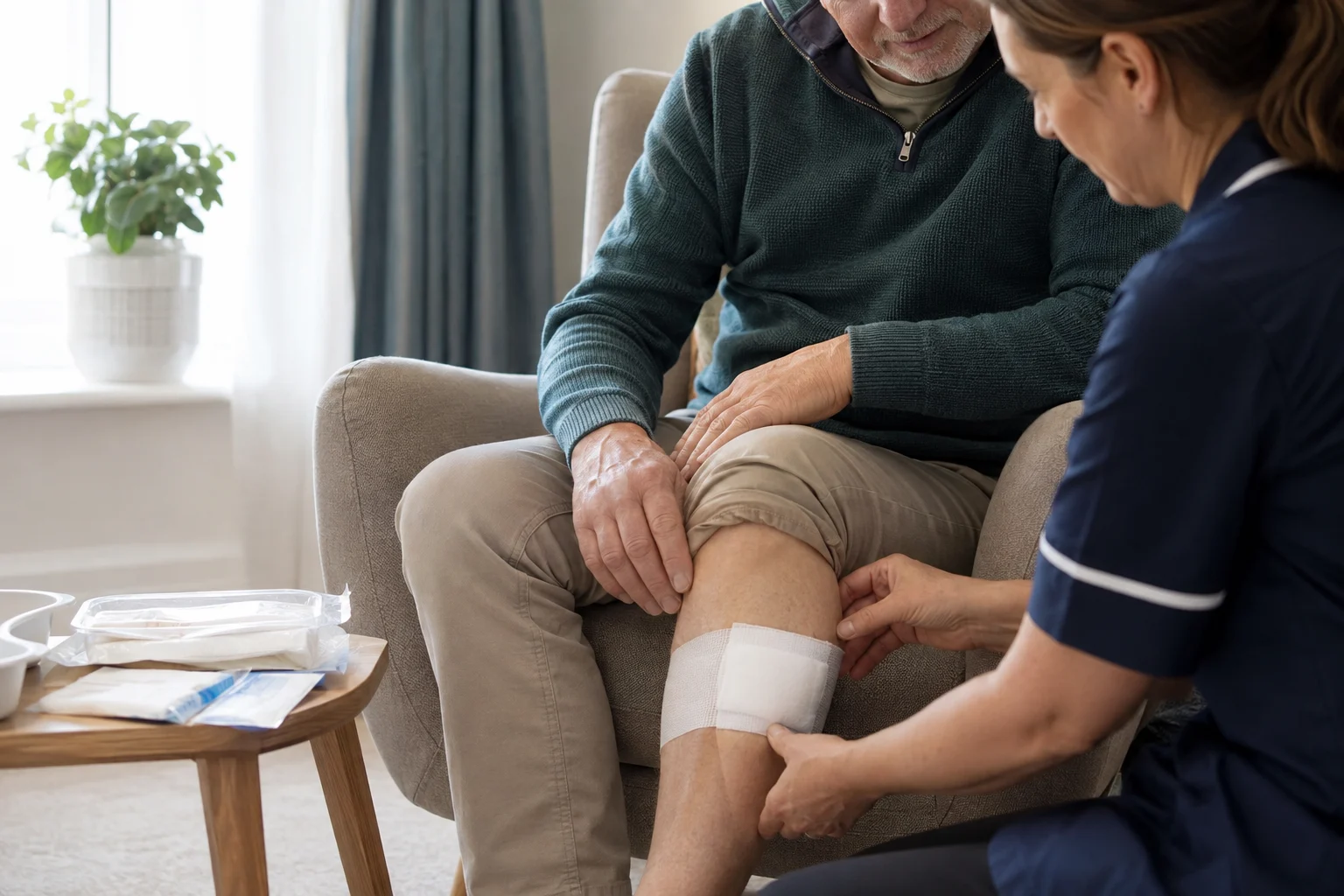
A wound that remains open deserves a proper reason, not simply more patience. Hyperbaric oxygen is used in specialist medicine for selected problem wounds, but it belongs alongside wound care, vascular assessment, infection management and pressure relief—not in place of them.
For the right person, HBOT may be a useful supporting treatment. The first job is making sure a more urgent or better-established part of the pathway is not being missed.
Why oxygen is relevant
Healing tissue has an oxygen demand.
Hyperbaric oxygen therapy means breathing concentrated oxygen inside a pressurised chamber. Pressure helps more oxygen dissolve into the bloodstream and reach tissue. Oxygen is involved in immune response, collagen formation and repair, which is why HBOT has been studied as an adjunct when wound healing is difficult.
That mechanism does not remove dead tissue, restore a blocked artery, treat an infection on its own or take pressure off an ulcer. A useful plan identifies which problem is actually holding healing back.
How the pieces connect
A useful wound pathway has an order.
- 01
Assess the cause
Clarify circulation, infection, loading and the underlying condition.
- 02
Treat the essentials
Coordinate wound care, vascular care, infection treatment and offloading.
- 03
Consider HBOT
Add it only when it is clinically appropriate and supports the wider plan.
The evidence boundary
“Non-healing wound” is not one diagnosis.
The Undersea and Hyperbaric Medical Society includes selected problem wounds among recognised HBOT indications. Selection matters: wound type, blood supply, infection, previous treatment and the wider medical picture change whether hyperbaric care is sensible.
For diabetic foot ulcers, NICE guideline NG19 says HBOT should not be offered unless it forms part of a clinical trial. We publish that boundary because “HBOT is used for wounds” is too broad to guide an individual decision.
What should already be happening
The chamber should join a pathway, not replace one.
Infection
Increasing redness, heat, swelling, discharge, fever or feeling unwell needs prompt clinical assessment.
Blood supply
A wound cannot heal well without adequate circulation. Vascular assessment and treatment may be more important than adding another therapy.
Pressure and loading
Foot ulcers often need pressure relief, footwear or offloading alongside dressings and metabolic care.
The underlying condition
Diabetes control, nutrition, medication, swelling and immune or vascular disease can all alter the plan.
Our chamber
1.5 ATA, stated clearly.
Much specialist wound research uses 2.0–2.4 ATA. Our chamber runs at 1.5 ATA, so we do not quietly convert outcomes from higher-pressure protocols into promises about treatment here.
Working with your team
Bring the care you already have with you.
If you are under district nursing, podiatry, tissue viability, vascular or surgical care, that context is valuable. HBOT should fit around the treatment plan rather than creating a second, disconnected version of it.
A constructive next step
Understand the wound first. Then decide whether HBOT adds anything.
No referral needed. Every Course includes a medical consultation. If your history or declaration raises a concern, the clinic will clarify it before treatment. For complex wounds, sharing information from the team already treating you makes the decision more useful.