
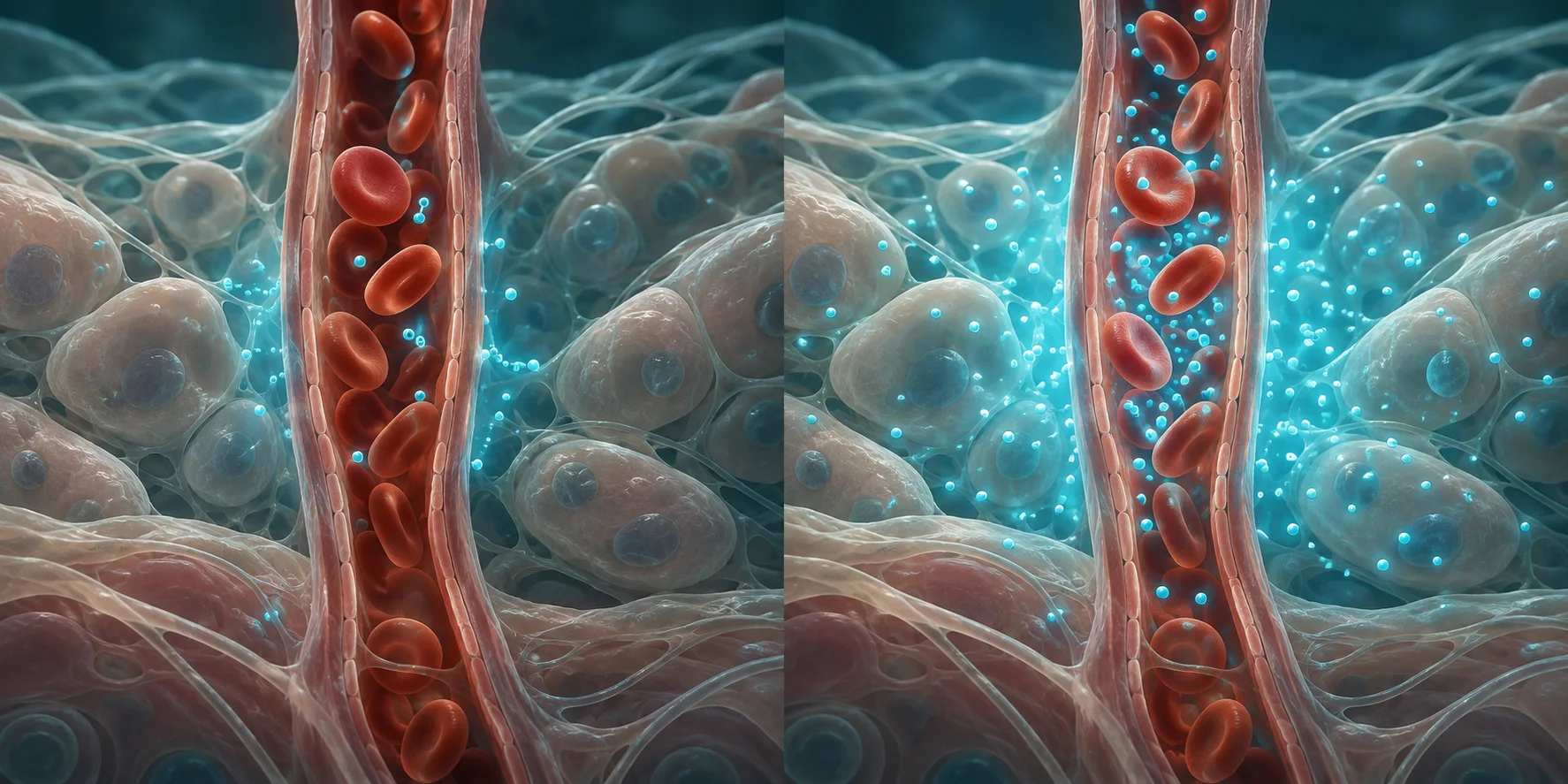
Hyperbaric oxygen therapy means breathing concentrated oxygen inside a pressurised chamber. Pressure changes how oxygen is carried through the body; the hour itself is usually quiet and straightforward.
The mechanism
More oxygen dissolves into the bloodstream.
Most oxygen normally travels attached to red blood cells. Inside a pressurised chamber, more oxygen can also dissolve directly into plasma—the liquid part of blood—and travel beyond the usual red-cell supply. That is the physical mechanism behind HBOT. Whether it produces a useful clinical result depends on the condition, pressure, session length and number of treatments.
This is why “oxygen therapy” is not one interchangeable product. Oxygen concentration without pressure is different from oxygen delivered at 1.5 ATA, and research performed at 2.4 ATA should not be silently presented as evidence for a lower-pressure chamber.
Our treatment numbers
The treatment you can actually compare.
- Pressure
- 1.5ATA
- Oxygen delivered
- 93–98%
- At pressure
- 60min
- People per chamber
- 1
Inside the chamber.
Via concentrator.
The standard session offered at booking.
A private session.
At our Cardiff hospital, 1.5 ATA with 93–98% oxygen delivers roughly seven times the oxygen available from ordinary air. We publish these numbers because they let you check whether a study resembles the session being offered—not because one set of numbers proves that HBOT will help every problem.
Why courses are common
Most research uses repeated sessions.
A single session can tell you what the chamber feels like. It cannot reproduce a study built around ten, twenty or forty treatments. Our guidance starts with the reason you are coming and proposes a pattern; every appointment remains editable.
What a useful evidence page does
It tells you where the match stops.
Our condition pages show the study size, pressure, session count and result. They also name the limitation once, clearly. That leaves room to explain what is encouraging and whether trying HBOT is a proportionate choice for you.
The practical next question
What does an hour in the chamber feel like?
The equipment looks unfamiliar. The experience is simpler: arrive, receive the safety briefing, go gradually to pressure, then read, listen or rest while the operator remains in contact.
